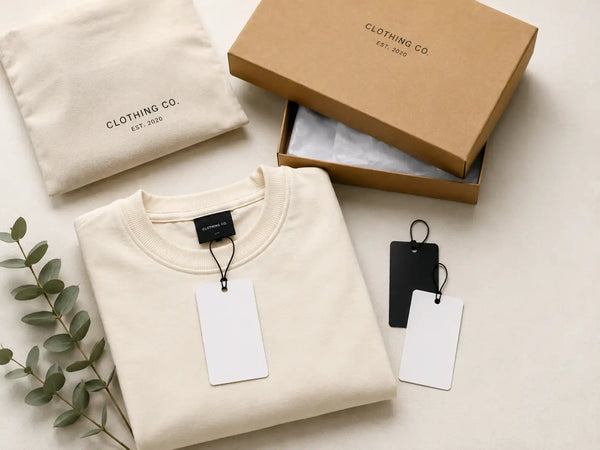
Your garment label is not just a legal requirement — it's a branding touchpoint that customers see, touch, and feel every time they wear your product. The right label reinforces premium quality. The wrong one undermines everything you've invested in the garment itself. Here's a complete guide to your options and how to choose.
The 5 Main Label Types
1. Woven Labels
Woven labels are created on a loom, weaving your brand design directly into the label fabric using coloured threads. The result is a textured, tactile label with a premium, handcrafted quality — you'll find woven labels on virtually every high-end streetwear and fashion brand worth its price tag.
Best for: Neck labels, chest patch labels, hem labels, sleeve branding
MOQ: Typically 100–500 pieces
Cost: £0.10–£0.40 per label
Premium perception: ⭐⭐⭐⭐⭐
2. Printed Labels
Printed labels are produced by printing your design onto a woven or non-woven base. They can reproduce fine detail and complex imagery that woven labels can't match, and are generally less expensive to produce.
Best for: Care labels (washing instructions), size labels, detailed artwork reproduction
MOQ: Typically 200+ pieces
Cost: £0.05–£0.20 per label
Premium perception: ⭐⭐⭐
3. Heat Transfer Labels (Tagless)
Heat transfer labels are printed onto a film and heat-pressed directly onto the inside of the garment, leaving no physical label — just a soft-printed design on the fabric. This is what brands mean when they say "tagless" or "soft hand feel." No label edge means no itching.
Best for: Athleisure, activewear, children's clothing, any brand prioritising comfort
Cost: Applied per garment at printing stage
Premium perception: ⭐⭐⭐⭐ (for comfort-focused brands)
4. Leather and PU Patch Labels
Leather or PU (synthetic leather) patches are embossed or debossed with your brand name or logo. They add an instantly premium, tactile quality most associated with durability and craft — commonly used as rear waistband patches on denim, or wrist labels on outerwear and jackets.
Best for: Denim, workwear, outerwear, premium streetwear
MOQ: 50–100 pieces
Cost: £0.30–£1.00 per label
Premium perception: ⭐⭐⭐⭐⭐
5. Rubber and Silicone Labels
Rubber and silicone labels are moulded patches with a three-dimensional, tactile finish. Popular in performance sportswear and premium streetwear as a modern alternative to traditional woven branding — they photograph well, resist wash damage, and have a distinctly premium feel.
Best for: Sportswear, premium hoodies, outerwear, activewear
MOQ: 100–500 pieces
Cost: £0.25–£0.80 per label
Premium perception: ⭐⭐⭐⭐⭐
Label Comparison Table
| Label Type | Best Use | MOQ | Cost/Unit | Premium Rating |
|---|---|---|---|---|
| Woven | Neck, patch, hem | 100–500 | £0.10–£0.40 | ⭐⭐⭐⭐⭐ |
| Printed | Care, size labels | 200+ | £0.05–£0.20 | ⭐⭐⭐ |
| Heat Transfer | Tagless comfort | — | Per garment | ⭐⭐⭐⭐ |
| Leather / PU Patch | Denim, outerwear | 50–100 | £0.30–£1.00 | ⭐⭐⭐⭐⭐ |
| Rubber / Silicone | Sportswear, hoodies | 100–500 | £0.25–£0.80 | ⭐⭐⭐⭐⭐ |
The Sweet Spot for New Brands
For most brands starting out, the combination that delivers the best balance of premium quality and cost is:
- Woven neck label — your brand name and logo, sewn into the neckline
- Printed care label — washing instructions and composition (legally required in most markets)
This combination looks professional, meets legal labelling requirements, and works across most garment types. As your order volumes grow, layer in leather patches, rubber logos, and woven hem labels to further elevate the product.
Don't Overlook Your Hang Tags
Hang tags are the cards attached to your garment at retail — and they're your first impression at point of sale. A well-designed hang tag communicates your brand story, quality positioning, and price point before the customer even touches the garment.
Standard hang tag sizes run from 5×9cm to 9×16cm. Material options include uncoated recycled card (sustainable positioning), gloss or matte laminated card (premium feel), or premium materials like metal or wood for ultra-high-end products.